

Flat-knit vs circular-knit: which is right for your sweater program?
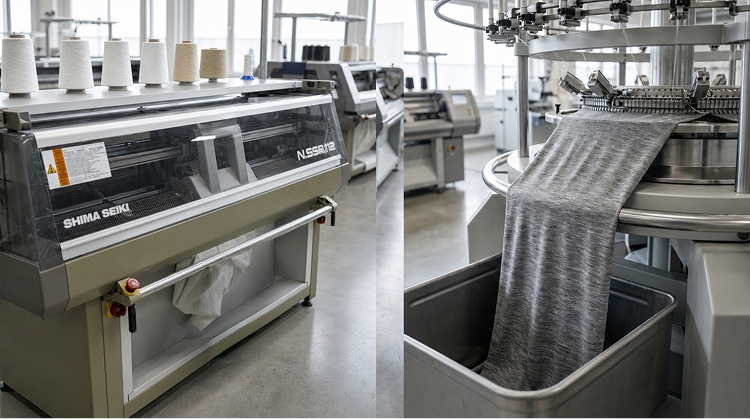
The difference between flat and circular knitting shapes everything from fit and finish to cost and minimum order quantity. Here's how to choose.
If you're developing a knitwear line, one of the first technical decisions is whether your styles should be flat-knit or circular-knit. The choice affects fit, finish, fabric behaviour, cost and how the garment is assembled.
What is flat knitting?
Flat knitting produces fabric panels — and, on modern computerized machines, fully-fashioned or even seamless garments — by knitting back and forth. It allows shaping (widening and narrowing) directly in the knit, rich structures like cables, ribs, intarsia and jacquards, and clean fully-fashioned edges. It's the classic route for sweaters, cardigans and structured knitwear.
Where circular knitting fits
Circular knitting produces a continuous tube of fabric that is then cut and sewn (cut-and-sew). It's efficient for high-volume jersey fabrics — t-shirts, fleece, basic sweatshirts — but offers less built-in shaping and a different hand-feel.
How to choose
- Choose flat-knit for sweaters, cardigans, fully-fashioned shaping, ribs, cables and premium structures.
- Choose circular/cut-and-sew for high-volume jersey basics where shaping matters less.
- Flat-knit reduces fabric waste through fully-fashioned panels and supports lower MOQs per colour.
At Ace Knitwear we specialise in flat-knit production on computerized Shima Seiki machines — ideal for brands that want structure, shaping and a premium finish. Share your tech pack or reference and we'll advise on the best construction for your goals.
Sourcing flat-knit garments?
Ace Knitwear manufactures premium flat-knit in Ludhiana on Japanese Shima Seiki machinery. Tell us what you're making.
Get a Quote